Buy bopfingen.eu ?
We are moving the project
bopfingen.eu .
Are you interested in purchasing the domain
bopfingen.eu ?
domain@kv-gmbh.de · 0541-91531010
Buy bopfingen.eu ?
Which elements are diatomic in chemistry?
In chemistry, the diatomic elements are those that naturally exist as molecules composed of two atoms bonded together. These elements are hydrogen (H2), nitrogen (N2), oxygen (O2), fluorine (F2), chlorine (Cl2), bromine (Br2), and iodine (I2). These elements form diatomic molecules because they are more stable when bonded to another atom of the same element, and they are commonly found in this form in nature. **
How many elements does chemistry know?
Chemistry knows 118 elements, which are listed in the periodic table. These elements range from hydrogen, the lightest element, to oganesson, the heaviest element. Each element has its own unique properties and characteristics, and they are the building blocks of all matter in the universe. **

Similar search terms for Chemistry Elements
Top-Angebote
Products related to Chemistry Elements:
-
Super Simple Chemistry by DK - GCSE Bitesize Study Guide, KS3 & KS4 Chemistry Revision, Paperback, Ages 11-16Get ready for GCSE science with Super Simple Chemistry, a bitesize study guide from DK. This popular revision companion is packed with clear diagrams, bite-sized topic pages, and handy 'Key Facts' boxes to help you understand complex chemistry concepts. Perfect for coursework, homework, or last-minute exam revision, this guide makes chemistry easy to grasp and helps you get exam-ready quickly. Each topic is broken down onto a single page, allowing you to quickly find, absorb, and revise exactly what you need. A large, clearly labelled central image anchors each page, visually explaining the core idea before information boxes unpack the underlying theory using simple, uncluttered graphics.7,90 £*Shipping: 2,99 £Secure redirect to the provider
-
Inspired Finds 3x3x3 Educational Magic Puzzle Cube STEM Math & Chemistry Learning Toy For Kids With Display Base chemistryTurn playtime into a fun learning adventure with the Educational Magic Puzzle Cube. This innovative 3x3x3 puzzle cube combines the excitement of problemsolving with the fundamentals of math, chemistry, and physics, making it both entertaining and...34,99 $*Shipping: 0,00 $Secure redirect to the provider
-
Kiss Bare But Better Medium false nails Chemistry 28 pcKISS Bare But Better Medium, 28 pc, Gel and Acrylic Nails for Women, Are you a fan of precise yet easy manicures? Then you'll love the ease of application of KISS Bare But Better Medium false nails. They allow you to create a beautiful manicure like a professional very quickly and in the comfort of your home. They will give your hands a sophisticated look that will be suitable for many different occasions. In addition, the manicure will last in perfect condition longer than one created with the help of conventional nail polish. Just glue on the nails according to size and you're done: a salon-like manicure! Characteristics: the set contains special nail glue for an instant salon-like gel manicure effect thanks to its excellent adhesion, it lasts on nails for a very long time designed for repeated use How to use: Apply a drop of glue to the artificial nails, put them on your actual nails and press them for at least 30 seconds. Press or carefully remove the cuticle with manicure scissors or clippers.8,07 £*Shipping: 3,99 £Secure redirect to the provider


-
What drives elements to combine in chemistry?
In chemistry, elements combine to form compounds in order to achieve a more stable and lower energy state. This is driven by the tendency of atoms to fill their outermost electron shell and achieve a full set of valence electrons, which is a more stable configuration. Elements can achieve this by either sharing electrons (covalent bonding) or transferring electrons (ionic bonding) to form compounds. Additionally, the formation of compounds can also be driven by the desire to achieve a more favorable arrangement of atoms and a lower overall energy state. **
-
What are the elements of buffer systems in chemistry?
Buffer systems in chemistry consist of a weak acid and its conjugate base, or a weak base and its conjugate acid. These systems work together to resist changes in pH by either accepting or donating protons. The equilibrium between the weak acid and its conjugate base helps to maintain a relatively constant pH in a solution. Buffer systems are important in biological systems to maintain the pH of bodily fluids within a narrow range. **
-
How many single bonds can nonmetallic elements form in chemistry?
Nonmetallic elements can form a maximum of one single bond in chemistry. This is because nonmetallic elements tend to gain electrons to achieve a stable electron configuration, making them more likely to form covalent bonds by sharing electrons with other atoms. Single bonds involve the sharing of one pair of electrons between two atoms. **
-
How many single bonds can non-metallic elements form in chemistry?
Non-metallic elements can form a maximum of three single bonds in chemistry. This is because non-metallic elements typically have a valence of 3 or less, meaning they can share electrons with other atoms to form up to three single bonds. Examples of non-metallic elements that can form single bonds include carbon, nitrogen, oxygen, and fluorine. **

How does one know in chemistry how different elements react with each other?
In chemistry, one can know how different elements react with each other through experimentation and observation. Scientists conduct experiments to mix different elements together and observe the resulting reactions. They also study the properties of each element, such as their reactivity, electronegativity, and valence electrons, to predict how they will interact with other elements. Additionally, the periodic table provides valuable information about the reactivity and chemical behavior of elements based on their position and properties. By combining experimental data and theoretical knowledge, chemists can understand and predict how different elements will react with each other. **
How is the formation of molecules with the following elements carried out in chemistry?
The formation of molecules with different elements in chemistry is carried out through chemical reactions. Atoms of different elements combine together by sharing electrons or transferring them to form chemical bonds. These bonds hold the atoms together in a stable arrangement, creating molecules with unique properties based on the types and arrangement of atoms involved. The process of forming molecules with different elements is fundamental to understanding the diversity of compounds and materials in the world around us. **
Top-Angebote
Products related to Chemistry Elements:
-
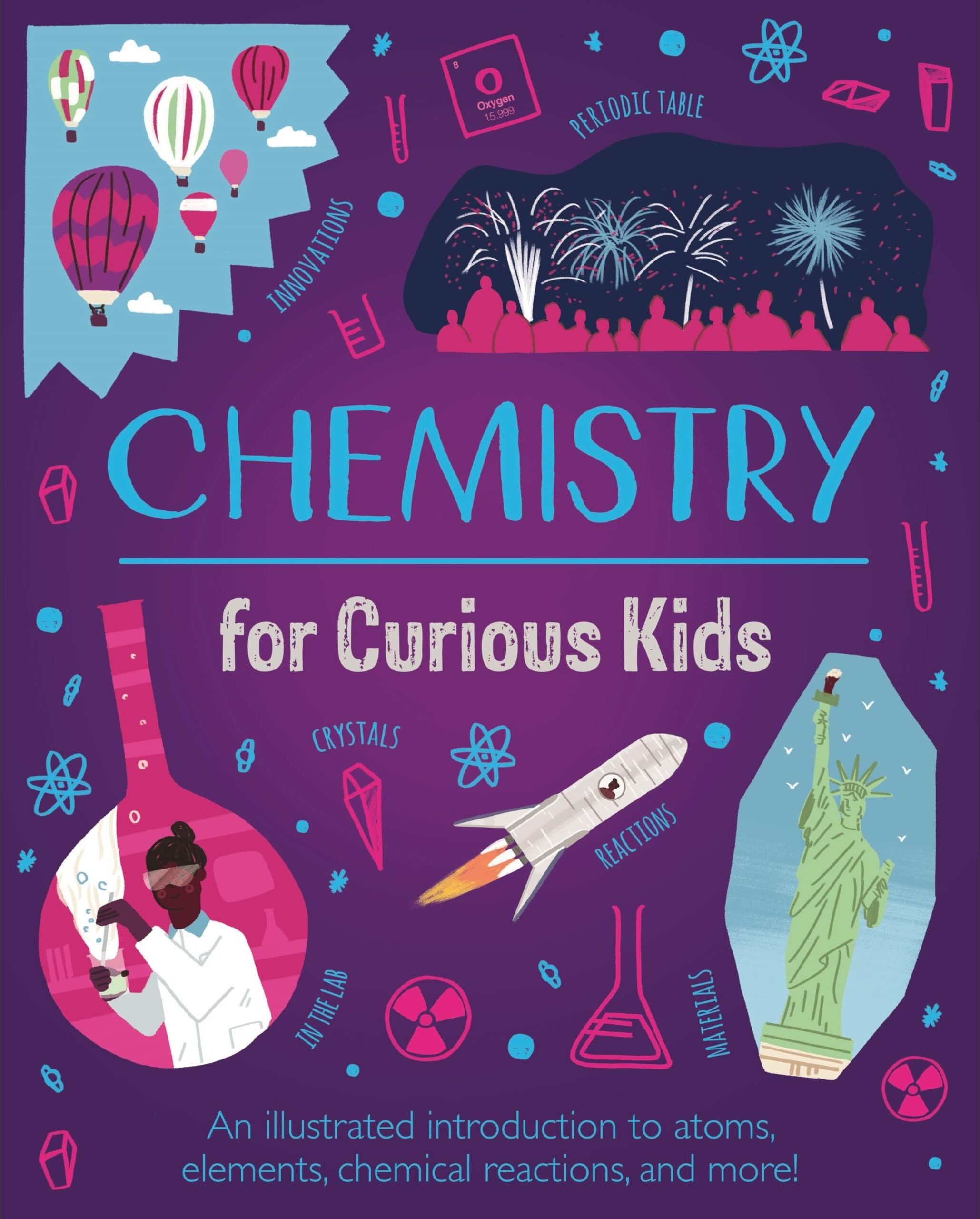
Arcturus Chemistry for Curious Kids: An Illustrated Introduction to Atoms, Elements, Chemical Reactions, and More! (Curious Kids, 2)Young readers can discover the wonders of chemistry with this accessible introduction, presented in a wonderful jacketed hardback format with full-colour illustrations. This inspirational book is packed with clear and engaging explanations of this fundamental topic, accompanied by beautiful illustrations by Alex Foster. Supporting STEM learning, this book is an ideal supplement to school education as it covers many core chemistry topics in an entertaining and easy-to-understand way. Big new concepts pop off the page thanks to vibrant diagrams and an engaging, energetic text. Kids will relish sharing them with friends and family! Young readers will love exploring exhilarating new ideas about: • Elements • Compounds • Molecules • Atoms • And much more! A great gift for readers aged 8-12.7,89 £*Shipping: 2,99 £Secure redirect to the provider
-
Looney Labs Chemistry Fluxx - Fast-Moving Chemistry-Inspired Card Game for Family and Group Sessions - Adult & ChildDiscover the ever-changing card game where the rules can shift from one turn to the next. Chemistry Fluxx combines the unpredictable gameplay of Fluxx with an elemental science theme. Players draw cards, play cards, and adapt their strategy as new rules and goals enter the game. Collect the required elements and laboratory equipment to meet the current goal, while using action and rule cards to change the direction of play. This game is suitable for family and group game sessions, and its compact format makes it easy to set up and play at home or while traveling. The game is supplied as a card game in a retail box, and the included instructions provide recommended player details and gameplay guidance.18,26 £*Shipping: 3,95 £Secure redirect to the provider
-
Super Simple Chemistry by DK - GCSE Bitesize Study Guide, KS3 & KS4 Chemistry Revision, Paperback, Ages 11-16Get ready for GCSE science with Super Simple Chemistry, a bitesize study guide from DK. This popular revision companion is packed with clear diagrams, bite-sized topic pages, and handy 'Key Facts' boxes to help you understand complex chemistry concepts. Perfect for coursework, homework, or last-minute exam revision, this guide makes chemistry easy to grasp and helps you get exam-ready quickly. Each topic is broken down onto a single page, allowing you to quickly find, absorb, and revise exactly what you need. A large, clearly labelled central image anchors each page, visually explaining the core idea before information boxes unpack the underlying theory using simple, uncluttered graphics.7,90 £*Shipping: 2,99 £Secure redirect to the provider
-
Inspired Finds 3x3x3 Educational Magic Puzzle Cube STEM Math & Chemistry Learning Toy For Kids With Display Base chemistryTurn playtime into a fun learning adventure with the Educational Magic Puzzle Cube. This innovative 3x3x3 puzzle cube combines the excitement of problemsolving with the fundamentals of math, chemistry, and physics, making it both entertaining and...34,99 $*Shipping: 0,00 $Secure redirect to the provider
-
Which elements are diatomic in chemistry?
In chemistry, the diatomic elements are those that naturally exist as molecules composed of two atoms bonded together. These elements are hydrogen (H2), nitrogen (N2), oxygen (O2), fluorine (F2), chlorine (Cl2), bromine (Br2), and iodine (I2). These elements form diatomic molecules because they are more stable when bonded to another atom of the same element, and they are commonly found in this form in nature. **
-
How many elements does chemistry know?
Chemistry knows 118 elements, which are listed in the periodic table. These elements range from hydrogen, the lightest element, to oganesson, the heaviest element. Each element has its own unique properties and characteristics, and they are the building blocks of all matter in the universe. **
-
What drives elements to combine in chemistry?
In chemistry, elements combine to form compounds in order to achieve a more stable and lower energy state. This is driven by the tendency of atoms to fill their outermost electron shell and achieve a full set of valence electrons, which is a more stable configuration. Elements can achieve this by either sharing electrons (covalent bonding) or transferring electrons (ionic bonding) to form compounds. Additionally, the formation of compounds can also be driven by the desire to achieve a more favorable arrangement of atoms and a lower overall energy state. **
-
What are the elements of buffer systems in chemistry?
Buffer systems in chemistry consist of a weak acid and its conjugate base, or a weak base and its conjugate acid. These systems work together to resist changes in pH by either accepting or donating protons. The equilibrium between the weak acid and its conjugate base helps to maintain a relatively constant pH in a solution. Buffer systems are important in biological systems to maintain the pH of bodily fluids within a narrow range. **
Similar search terms for Chemistry Elements
-
Kiss Bare But Better Medium false nails Chemistry 28 pcKISS Bare But Better Medium, 28 pc, Gel and Acrylic Nails for Women, Are you a fan of precise yet easy manicures? Then you'll love the ease of application of KISS Bare But Better Medium false nails. They allow you to create a beautiful manicure like a professional very quickly and in the comfort of your home. They will give your hands a sophisticated look that will be suitable for many different occasions. In addition, the manicure will last in perfect condition longer than one created with the help of conventional nail polish. Just glue on the nails according to size and you're done: a salon-like manicure! Characteristics: the set contains special nail glue for an instant salon-like gel manicure effect thanks to its excellent adhesion, it lasts on nails for a very long time designed for repeated use How to use: Apply a drop of glue to the artificial nails, put them on your actual nails and press them for at least 30 seconds. Press or carefully remove the cuticle with manicure scissors or clippers.8,07 £*Shipping: 3,99 £Secure redirect to the provider
-
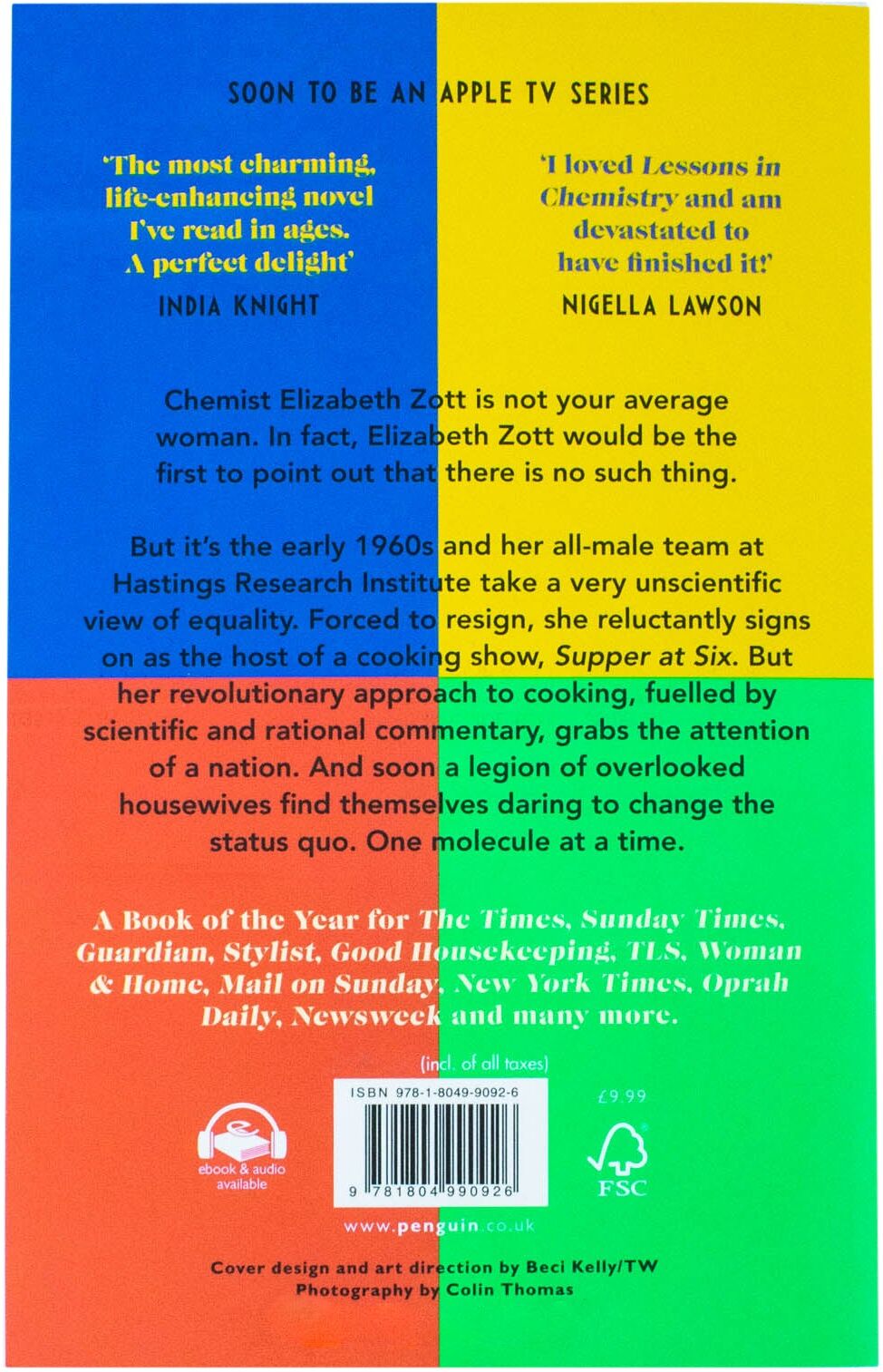
Penguin Lessons in Chemistry: The multi-million copy bestseller by Bonnie GarmusYour ability to change everything - including yourself - starts hereChemist Elizabeth Zott is not your average woman. In fact, Elizabeth Zott would be the first to point out that there is no such thing.But it's the early 1960s and her all-male team at Hastings Research Institute take a very unscientific view of equality. Forced to resign, she reluctantly signs on as the host of a cooking show, Supper at Six. But her revolutionary approach to cooking, fuelled by scientific and rational commentary, grabs the attention of a nation.Soon, a legion of overlooked housewives find themselves daring to change the status quo. One molecule at a time.5,99 £*Shipping: 2,99 £Secure redirect to the provider
-
Elements Duck Polyresin Figurine, 12 Inch"Add a touch of country charm to your decor with this Elements Duck Figurine. Beautifully crafted of resin, this playful decorative piece features a duck holding a ""Welcome"" sign and is designed with stunning attention to detail."23,19 $*Shipping: 0,00 $Secure redirect to the provider
-
How many single bonds can nonmetallic elements form in chemistry?
Nonmetallic elements can form a maximum of one single bond in chemistry. This is because nonmetallic elements tend to gain electrons to achieve a stable electron configuration, making them more likely to form covalent bonds by sharing electrons with other atoms. Single bonds involve the sharing of one pair of electrons between two atoms. **
-
How many single bonds can non-metallic elements form in chemistry?
Non-metallic elements can form a maximum of three single bonds in chemistry. This is because non-metallic elements typically have a valence of 3 or less, meaning they can share electrons with other atoms to form up to three single bonds. Examples of non-metallic elements that can form single bonds include carbon, nitrogen, oxygen, and fluorine. **
-
How does one know in chemistry how different elements react with each other?
In chemistry, one can know how different elements react with each other through experimentation and observation. Scientists conduct experiments to mix different elements together and observe the resulting reactions. They also study the properties of each element, such as their reactivity, electronegativity, and valence electrons, to predict how they will interact with other elements. Additionally, the periodic table provides valuable information about the reactivity and chemical behavior of elements based on their position and properties. By combining experimental data and theoretical knowledge, chemists can understand and predict how different elements will react with each other. **
-
How is the formation of molecules with the following elements carried out in chemistry?
The formation of molecules with different elements in chemistry is carried out through chemical reactions. Atoms of different elements combine together by sharing electrons or transferring them to form chemical bonds. These bonds hold the atoms together in a stable arrangement, creating molecules with unique properties based on the types and arrangement of atoms involved. The process of forming molecules with different elements is fundamental to understanding the diversity of compounds and materials in the world around us. **
* All prices are inclusive of VAT and, if applicable, plus shipping costs. The offer information is based on the details provided by the respective shop and is updated through automated processes. Real-time updates do not occur, so deviations can occur in individual cases. ** Note: Parts of this content were created by AI.